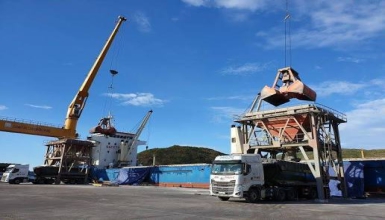
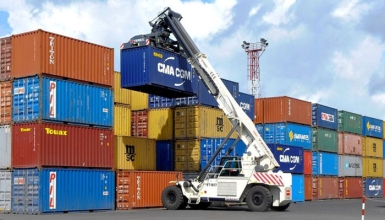
What is Domestic Sea Freight Service?
Domestic sea freight service is a solution for transporting goods by sea between seaports within Vietnam. This method is ideal for large-volume shipments, bulky cargo, or businesses looking to optimize logistics costs on long-haul routes.
With advantages in carrying capacity and competitive pricing, sea transport plays a vital role in the domestic supply chain. Global Link Group Joint Stock Company provides domestic sea freight solutions combined with appropriate delivery methods, ensuring the smooth movement of goods between regions across the country.
Advantages of Domestic Sea Freight Service
High Cargo Carrying Capacity
Sea vessels are capable of transporting large volumes of cargo in a single voyage. Consequently, sea transport is particularly suitable for large quantities, heavy or bulky goods, and shipments requiring regular transport between regions.
Competitive Shipping Costs
For large-volume shipments and long-distance routes, sea transport often offers cost-efficiency. Businesses can choose this method to optimize their logistics budgets and reduce transportation cost pressures.
Suitable for a wide range of goods
Sea transport accommodates various categories of cargo, including raw materials, machinery, equipment, consumer goods, industrial products, containerized freight, and other commercial commodities.
Connecting major economic regions
A network of seaports spanning coastal provinces and cities connects key manufacturing, commercial, and distribution hubs. Goods can be transported between ports and subsequently delivered to warehouses or final destinations via road transport.
Domestic sea transport methods
Full Container Load (FCL) transport
FCL transport is ideal for large shipments or those requiring the exclusive use of a container. Goods are loaded into a container and transported from the origin port to the destination port according to an agreed schedule.
Less-than-Container Load (LCL) transport
For shipments that do not fill an entire container, businesses can opt for LCL transport. Shipments from multiple customers are consolidated into a single container, helping to optimize transportation costs.
Inter-port container transport
This method suits businesses needing to move containers between domestic seaports. Upon arrival at the destination port, containers can be further transported by road to warehouses or delivery locations.
Combined sea and road transport
In practice, goods are often transported by road from a warehouse to the port, shipped by sea to the destination port, and finally delivered by truck.
This combined approach helps establish a transportation chain extending from the point of origin to the final destination.
Types of goods suitable for domestic maritime transport
Production materials
High-volume materials—such as industrial supplies, production inputs, and goods in bags or bales—can be transported by sea to optimize costs when moving between regions.
Machinery and Equipment
Industrial machinery, equipment, and oversized goods can be transported by sea using appropriate loading methods and container types.
Consumer and Commercial Goods
Businesses distributing goods in large volumes can utilize sea transport to move products from production areas to distribution centers and warehouses in other regions.
Bulky Cargo
Sea transport is an ideal choice for oversized or heavy items, particularly when delivery time is not critical and cost optimization is a priority for the business.
Domestic Sea Freight Service Process
Shipment Information Intake
The customer provides details regarding the type of goods, quantity, weight, dimensions, pickup location, port of departure, port of destination, and delivery address. This information enables the carrier to determine the most suitable transport plan.
Consultation and Quotation
Based on the shipment characteristics and customer requirements, Global Link Group Joint Stock Company advises on the transport method, route, multimodal options, and estimated timeline. Costs are calculated based on factors specific to the shipment and the scope of services provided.
Preparation and Loading
Goods are inspected and properly packed or containerized before being transported to the port. Proper loading and packing help minimize the risk of shifting, impact, and damage during transit.
Transport to the port
For all-inclusive services, goods can be transported by truck from the warehouse or the sender's address to the port. Delivery timing must be coordinated with the vessel schedule.
Sea transport
Once necessary procedures are completed, goods are loaded onto the vessel and transported to the destination port. Transit time depends on the route, vessel schedule, and actual operational conditions.
Cargo receipt and final delivery
Upon arrival at the destination port, the goods undergo receipt procedures and can be further transported by road to the recipient's warehouse or address, depending on the selected service scope.
What factors influence domestic sea freight costs?
Cargo weight and volume
Weight, volume, and packing methods are key factors in determining shipping costs. For full container loads (FCL), the container type and quantity used also directly impact the total cost.
Origin and destination ports
Each shipping route between ports involves different distances, schedules, and freight rates. Selecting the right route allows businesses to balance costs against transit time.
Type of Cargo
The characteristics and nature of the cargo can influence packaging, handling, storage, and transportation methods. Cargo with special requirements may necessitate specific handling procedures.
End-to-End Handling Services
If a customer requests warehouse-to-warehouse transport, the total cost may include road transport from the origin address to the port and from the destination port to the delivery address. Therefore, the scope of service should be clearly defined when providing a quote.
Domestic Sea Freight Transit Time
Domestic sea freight transit time depends on the port route, vessel schedule, cargo acceptance times, port handling operations, and delivery arrangements. Compared to air freight or certain road transport routes, sea freight generally takes longer.
However, for large-volume shipments that do not require urgent delivery, sea freight remains an efficient choice due to its high carrying capacity and competitive costs.
Considerations for Domestic Sea Freight Services
Providing Accurate Cargo Information
Customers should provide complete information regarding the cargo type, weight, dimensions, quantity, and packaging method. Accurate information enables the carrier to select the appropriate transport vehicles and handling procedures.
Selecting the Right Container Type
When shipping goods via container, it is essential to select a container type that suits the cargo's dimensions, weight, and characteristics. Using the appropriate container maximizes space utilization and ensures better protection for the goods.
Cargo Packing and Securing
Goods must be securely packed and properly fastened inside the container or transport vehicle. Fragile items, machinery, and oversized cargo require specific securing and protective measures.
Proactive Schedule Monitoring
Since maritime transport relies on vessel schedules, businesses should proactively plan their shipments and deliver goods to the port on time to avoid additional costs or schedule disruptions.
Why Choose Global Link Group Joint Stock Company?
Tailored Transport Solutions
Global Link Group Joint Stock Company provides transport solutions customized to the specific characteristics of the cargo, the route, and each client's requirements. Selecting the right solution helps businesses balance costs, transit times, and delivery needs.
Integrated Transport Support
In addition to the sea leg, Global Link can coordinate road transport to move goods from the warehouse to the port and from the port to the final delivery address. This integrated approach ensures a seamless transportation process.
Meeting Large-Scale Cargo Transport Needs
Domestic sea freight services are ideal for businesses requiring the movement of large volumes of goods between regions. Global Link focuses on developing transport solutions tailored to the specific requirements of each shipment.
Which Businesses Benefit from Domestic Sea Freight Services?
This service is suitable for manufacturing, trading, distribution, and import-export companies, as well as any entity needing to transport large quantities of goods between provinces and cities connected by seaports.
In particular, sea freight is a compelling option for heavy or bulky cargo, full container loads (FCL), and shipments where delivery speed is not critical but cost optimization is a priority.
Conclusion
Domestic sea freight is an effective solution for moving large volumes of goods across the country. With advantages in transport capacity and cost-efficiency, this method suits a wide range of cargo types and business logistics needs.
Global Link Group Joint Stock Company provides domestic sea freight solutions integrated with road transport. We aim to optimize routes, costs, and delivery processes, helping businesses gain greater control over their nationwide cargo transport and distribution operations.